

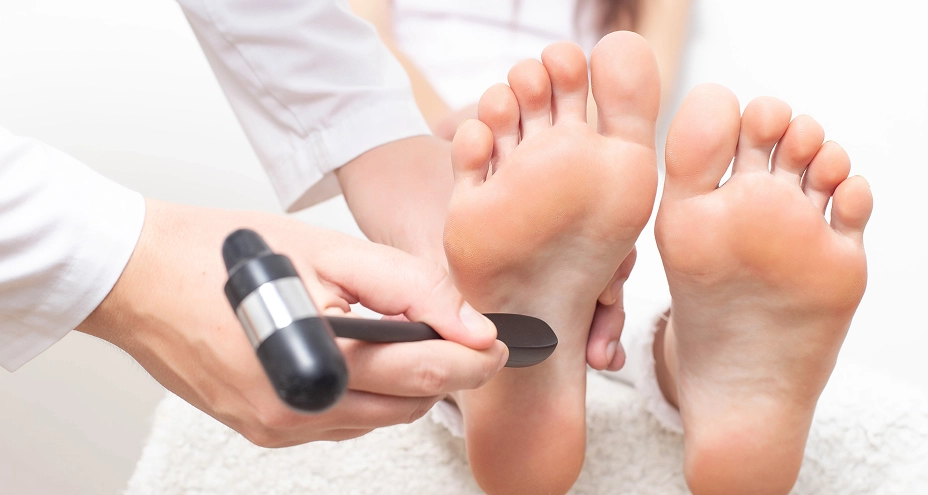
Scleroderma
(Systemic Sclerosis)

MBChB (New Zealand), PGDipObstMedGyn, FRACP (New Zealand), FAMS (Rheumatology)

Scleroderma, also known as systemic sclerosis, is a rare autoimmune condition that causes the skin to thicken and tighten. It can also affect the joints, muscles and internal organs, including the lungs, heart, kidneys and gastrointestinal tract. The pattern and severity of disease vary widely. Some individuals experience mild, slowly progressing skin involvement, while others may develop more extensive disease that requires closer monitoring.
Early diagnosis and appropriate treatment enable the timely identification and effective management of complications, helping to improve long-term outcomes. At the Centre for Rheumatology & Arthritis, Dr Poh provides comprehensive evaluation and personalised care aimed at controlling disease activity and protecting long-term organ function.
The classification of scleroderma is based on the pattern and extent of skin involvement, as well as the risk of internal organ complications.
Limited systemic sclerosis is the most common form of scleroderma. Skin thickening is typically confined to the fingers, hands, forearms, lower legs and face. Some individuals may also experience joint pain, Raynaud’s phenomenon and heartburn. Internal organ involvement is less common than in other forms of the disease.
Diffuse systemic sclerosis involves more widespread skin thickening, affecting areas such as the fingers, hands, arms, thighs, legs, face and trunk. It may progress more rapidly and carries a higher risk of complications involving internal organs, particularly affecting the lungs, kidneys and heart. Regular follow-up and early treatment are essential to manage the condition effectively.
Localised scleroderma mainly affects the skin and does not involve internal organs. It often appears as isolated patches of thickened skin and is different from systemic sclerosis in both its outlook and treatment approach.
The exact cause of scleroderma is not fully understood. It is believed to develop in genetically susceptible individuals after exposure to certain environmental triggers, which can stimulate the immune system and result in excess collagen production.
Scleroderma is not directly inherited, and most individuals do not have affected family members. However, genetic factors may increase susceptibility, particularly in those with a personal or family history of autoimmune diseases.
Scleroderma is more common in women and usually develops between 30 and 50 years of age, but it can occur at any age.
In susceptible individuals, environmental exposures to certain harmful substances and chemicals may increase the risk of scleroderma.
The symptoms of scleroderma can vary widely depending on the type and the organs affected. Some individuals experience primarily skin-related changes, while others develop systemic complications. Symptoms often appear gradually and can range in severity from person to person.

 Skin Changes
Scleroderma can cause the skin to thicken, tighten or harden, most commonly affecting the fingers, hands, feet and face. Early signs may include swelling of the fingers and itchiness, which can progress to tightening that reduces flexibility and hand function. The affected skin may also change colour, becoming lighter or darker, and can appear shiny due to the tightness. Some people may develop small red spots, called telangiectasia, on the hands and face.
Skin Changes
Scleroderma can cause the skin to thicken, tighten or harden, most commonly affecting the fingers, hands, feet and face. Early signs may include swelling of the fingers and itchiness, which can progress to tightening that reduces flexibility and hand function. The affected skin may also change colour, becoming lighter or darker, and can appear shiny due to the tightness. Some people may develop small red spots, called telangiectasia, on the hands and face.
-
Raynaud’s Phenomenon
This is common in scleroderma. It happens when the small blood vessels in the fingers and toes overreact to cold temperatures, causing them to constrict. During an episode, fingers and toes may feel painful and numb and can turn white, blue or red. Repeated or severe episodes can increase the risk of digital ulcers or delayed wound healing.
-
Joint Pain and Stiffness
Joint discomfort, swelling and morning stiffness may occur in scleroderma. Tightening of the skin over the joints may further restrict movement and affect daily function.
-
Digestive Symptoms
Scleroderma can affect any part of the digestive system causing heartburn, acid reflux,
difficulty swallowing, bloating, constipation or diarrhoea. Slow movement of food
through the gut can cause early satiety, unintended weight loss or nutritional problems
if persistent.
-
Heart- and Lung-related Symptoms
When scleroderma affects the lungs or heart, it can lead to shortness of breath, reduced
exercise tolerance, a persistent dry cough, chest discomfort or palpitations.
Scleroderma can also cause scarring of lung tissues and may increase blood pressure in
the circulation between the heart and lungs, a condition called pulmonary arterial
hypertension. Early recognition and regular monitoring of heart and lung symptoms are
important to reduce the risk of serious complications.

Diagnosing scleroderma requires a careful and comprehensive evaluation, as symptoms can vary widely and may overlap with other autoimmune conditions. Early assessment is important to determine the extent of skin and organ involvement.
Assessment begins with a detailed discussion of symptoms. During the examination, the doctor will assess the pattern and extent of skin involvement and other clinical features suggestive of systemic sclerosis.
Blood tests may detect specific autoantibodies associated with systemic sclerosis. These antibodies support the diagnosis and may provide insight into the disease subtype and potential organ involvement. Routine blood tests may also be used to monitor overall health and check for complications in other organs.
Examination of the small blood vessels at the base of the fingernails (nailfold capillaroscopy) may reveal characteristic vascular changes that support the diagnosis.
Further investigations are guided by symptoms and may include lung function tests and high-resolution CT scans to evaluate lung involvement, echocardiography to assess heart function, urine tests to check for kidney involvement, and endoscopy if significant digestive symptoms are present.
How Do Rheumatologists Treat Scleroderma?
Treatment of scleroderma focuses on controlling the overactive immune system, managing symptoms and preventing or limiting organ damage. Management is tailored to each individual, based on the type of scleroderma, the extent of skin involvement and the presence of internal organ complications.
Immunosuppressive medications may be prescribed to reduce inflammation and slow progression, particularly in individuals with skin, joints, muscle, heart or lung involvement. The choice of treatment depends on disease severity, organ involvement and overall health. Regular monitoring is important to assess effectiveness and safety of therapy.
Medications that improve blood flow may be used to treat Raynaud’s phenomenon.
Acid-suppressing medications, such as proton pump inhibitors, are commonly used to manage reflux. In some cases, antibiotics or medications that improve gastrointestinal mobility may help relieve bloating, diarrhoea and constipation.
When internal organs are affected, treatment is tailored to address the specific complication. This may include immunosuppressive therapy for interstitial lung disease, targeted therapies for pulmonary arterial hypertension, and careful blood pressure monitoring to detect early signs of scleroderma renal crisis. Regular monitoring is essential to identify complications early and guide timely care.
Physiotherapy can help improve strength, mobility and maintain independence in daily activities. Hand therapy may help prevent stiffness and joint contractures.
Although scleroderma is a long-term condition, practical lifestyle measures can help manage symptoms and support overall well-being.
Regular exercise helps maintain joint mobility, reduce stiffness and improve circulation. Range-of-motion exercises are especially important in the early stages to help preserve joint function and flexibility.
Smoking narrows blood vessels, which can worsen Raynaud’s symptoms and contribute to lung problems. Quitting smoking is strongly recommended, and support from your healthcare provider can improve your chances of success.
Dry or tight skin should be moisturised regularly to reduce discomfort. Use gentle skin-care products and avoid hot baths, harsh soaps or strong household chemicals, which may worsen dryness. Wearing sun protection is also recommended.
Eating smaller, more frequent meals and avoiding foods that trigger heartburn can help improve comfort. Avoiding late-night meals and elevating the head of the bed may also reduce reflux.
Keeping your hands, feet and core warm with layers, boots and gloves can help prevent Raynaud's episodes. Try to avoid sudden changes in temperature, including prolonged exposure to strong air-conditioning and take care to protect your fingers and toes from cuts or injuries.
Our Rheumatologist
Dr Poh Yih Jia
Senior Consultant Rheumatologist
Dr Poh Yih Jia is a senior consultant rheumatologist with over 20 years of medical experience in New
Zealand and Singapore. She has extensive expertise in managing complex autoimmune and connective tissue
diseases, including scleroderma.
Her commitment to patient-centred care has earned her multiple accolades, including the Singapore Health
Quality Service Award and the Service with a Heart Award. She remains committed to advancing
rheumatology through clinical practice, education and research, ensuring her patients receive current,
evidence-based care for scleroderma and other rheumatic conditions.

FAQs on Scleroderma
Scleroderma is a chronic autoimmune condition characterised by abnormal immune activation and excessive collagen production, which can cause skin thickening and, in some cases, affect internal organs. The exact cause is unknown, but it is thought to result from a combination of genetic susceptibility and environmental triggers.
Early symptoms of scleroderma may include skin thickening and tightness, joint pain and swelling, and Raynaud’s phenomenon. Some individuals may also experience digestive symptoms, shortness of breath, dizziness or palpitations. A medical evaluation, supported by blood tests and other investigations when needed, helps confirm the diagnosis.
While there is currently no cure for scleroderma, treatment can help manage symptoms, control inflammation and reduce the risk of complications. With regular monitoring and personalised care, many individuals are able to maintain good function and quality of life over the long term.
Scleroderma can lead to complications such as digital ulcers, gastrointestinal dysfunction, or involvement of the kidneys, lungs or heart. The risk varies depending on the type and severity of disease. Regular monitoring helps detect complications early and allows timely treatment to minimise long-term impact.
Scleroderma cannot currently be prevented, as its exact cause is not fully understood. The focus is therefore on early recognition and timely treatment. Prompt evaluation of symptoms allows for appropriate monitoring and intervention, helping protect organ function and overall health.